You Won't Believe How San Diego's Neighborhoods Tell Its Soul
San Diego isn’t just beaches and sunshine—it’s a city shaped by its neighborhoods, each with its own rhythm and story. From the murals of Chicano Park to the surfside vibe of Ocean Beach, culture lives in the streets, cafes, and corner markets. I walked through districts that felt worlds apart, yet all undeniably San Diegan. This is more than a travel guide—it’s a journey into the heart of a city where identity is painted on walls, served in tacos, and surfed in on morning waves.
The Cultural Mosaic of San Diego: More Than a Postcard City
San Diego is often reduced to its postcard image: golden shores, blue skies, and the distant call of sea lions from the pier. But beneath this polished surface lies a deeper, more textured reality. The city’s true essence is not captured in wide-angle beach photos, but in the quiet corners of its neighborhoods, where generations have built lives shaped by migration, geography, and resilience. These districts are not just places to visit—they are living narratives, each contributing a unique thread to the city’s cultural fabric. From the vibrant street art of Barrio Logan to the tree-lined avenues of Golden Hill, San Diego’s identity is rooted in diversity, not uniformity.
What makes San Diego distinct from other coastal cities is how its neighborhoods maintain strong individual identities while still feeling like part of a cohesive whole. Unlike cities where urban development flattens local character, San Diego’s geography—bounded by the Pacific Ocean, mountains, and international borders—has encouraged the growth of self-contained communities. Each district developed in relative isolation, fostering unique cultural rhythms. A morning in Old Town feels centuries removed from an evening in North Park, yet both pulse with the same understated warmth that defines San Diegans. This diversity is not performative; it’s embedded in daily life, from the bakeries that open at dawn to the community centers that host generational celebrations.
Understanding San Diego means shifting focus from landmarks to the spaces in between. While tourists flock to the Zoo or Coronado Beach, the real stories unfold in neighborhood plazas, corner stores, and backyard gatherings. The city’s cultural richness comes not from grand monuments, but from the accumulated gestures of everyday life—how a taco stand remembers your order, how a mural changes with the light, how a street fair brings strangers together. These moments, repeated across districts, form the quiet heartbeat of the city. To know San Diego is to walk its blocks with curiosity and respect, allowing each neighborhood to reveal itself in its own time.
Balboa Park: Where Arts and Heritage Collide
Balboa Park stands as a testament to San Diego’s commitment to culture and beauty. Spanning over 1,200 acres, it is one of the largest urban cultural parks in the United States, housing seventeen museums, multiple performance venues, and lush botanical gardens. Its Spanish Colonial Revival architecture, with red-tiled roofs and ornate facades, traces back to the 1915 Panama-California Exposition, an event designed to celebrate the opening of the Panama Canal and position San Diego as a gateway to the Pacific. That vision endures. Today, the park remains a living monument to the city’s historical ambitions and artistic aspirations, drawing locals and visitors alike into its shaded walkways and open-air courtyards.
The park’s cultural significance extends beyond its architecture. It is a dynamic hub where art, history, and community life intersect. The San Diego Museum of Art, the Natural History Museum, and the Museum of Us offer educational experiences rooted in both global and regional narratives. Meanwhile, the Old Globe Theatre stages classic and contemporary plays, continuing a tradition of live performance that began over eight decades ago. During festivals like Dia de los Muertos or the December Nights celebration, the park transforms into a city-wide gathering place, where music, food, and dance spill into the plazas. These events are not curated for tourists alone—they are deeply rooted in local participation, reflecting the diverse communities that call San Diego home.
Yet Balboa Park is not just a destination for special occasions. For many residents, it is a daily refuge. Joggers trace the trails at sunrise, families picnic under palm trees, and seniors practice tai chi near the Lily Pond. The Inez Grant Parker Memorial Rose Garden blooms in cascading waves of color, offering a sensory experience that grounds visitors in the present. The park’s design encourages slow movement and quiet observation, a rare quality in modern urban spaces. In a city often associated with leisure, Balboa Park elevates that leisure into something meaningful—a space where beauty and knowledge are accessible to all. It is not merely a green space; it is a cultural anchor, reminding the city of its capacity for imagination and unity.
Old Town: The Birthplace with a Living Pulse
Old Town San Diego is often called the birthplace of California, and for good reason. It was here, in 1769, that Spanish explorer Gaspar de Portolá established the first European settlement in what would become the state. Today, Old Town is a living museum, where adobe buildings from the 19th century stand alongside family-run restaurants and artisan shops. But unlike static historical sites, Old Town pulses with energy. It is not preserved behind glass—it is lived in, celebrated, and continuously reshaped by those who honor its past while embracing the present. The scent of roasting chiles, the sound of mariachi music drifting from a courtyard, and the sight of dancers in traditional attire all signal that history here is not frozen; it is performed daily.
The heart of Old Town’s cultural authenticity lies in its food. Generations-old taquerias serve carne asada tacos on handmade tortillas, while local salsas carry recipes passed down through families. These eateries are not themed attractions; they are neighborhood institutions, often run by descendants of Mexican-American families who have lived in the area for decades. Visitors who come seeking “authentic” experiences are often surprised to find that the real magic lies not in staged demonstrations, but in the quiet moments—watching an abuela shape dough by hand, or hearing a server greet a regular in Spanish. These interactions reveal a community that values continuity, where cultural pride is expressed through hospitality and craftsmanship.
Old Town also grapples with the challenges of balancing tourism and tradition. As one of the city’s most visited districts, it must accommodate large crowds while preserving its integrity. Some critics argue that commercialization has diluted its authenticity, pointing to souvenir shops and chain-adjacent eateries. Yet, the presence of organizations like the Old Town San Diego Chamber of Commerce and the Save Our Heritage Organisation shows a strong local commitment to preservation. Historic buildings are meticulously maintained, and cultural festivals—such as Las Posadas during Christmas or the annual Mexican Independence Day celebration—remain community-driven. In Old Town, the past is not a backdrop; it is a living conversation between generations, where every brick and every bite tells a story.
Barrio Logan: Art, Activism, and Identity in the Streets
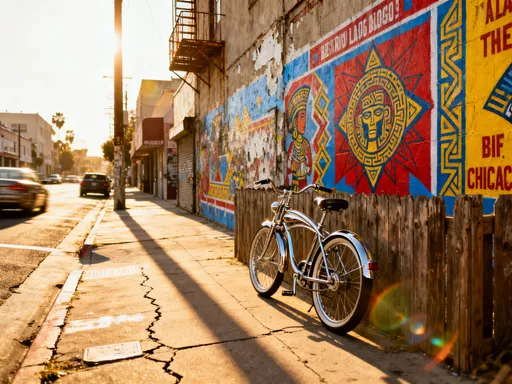
Beneath the freeway overpasses of Interstate 5 lies one of San Diego’s most powerful cultural statements: Chicano Park. What began as a grassroots protest in 1970—when residents occupied the land beneath the onramps to prevent the construction of a parking lot—has grown into a nationally recognized landmark of Chicano art and activism. Today, the park is home to the largest collection of outdoor murals in the United States, with vibrant paintings covering the concrete pillars of the bridges above. These murals depict scenes of indigenous heritage, civil rights struggles, revolutionary leaders, and community life, forming a visual narrative of resistance, pride, and resilience.
Chicano Park is more than an art installation; it is a symbol of community empowerment. The murals were created by local artists, many of whom grew up in Barrio Logan, and continue to be maintained by volunteers and cultural organizations. Annual events like the Chicano Park Day celebration draw thousands, featuring traditional dance, live music, and food vendors. Children learn about their heritage through storytelling and mural tours, while elders share memories of the park’s founding. This intergenerational exchange ensures that the park remains a living space, not a monument. The art evolves, reflecting current social issues while honoring historical struggles, proving that cultural expression can be both rooted and responsive.
Barrio Logan’s identity extends beyond the park. The neighborhood is a hub of lowrider culture, where customized cars are not just vehicles but works of art and symbols of identity. Weekly cruises and car shows bring families together, turning streets into open-air galleries. Local workshops teach youth everything from mural painting to engine restoration, fostering skills and pride. Despite pressures from urban development and gentrification, Barrio Logan has maintained its cultural autonomy through collective action. Residents advocate for affordable housing, environmental justice, and educational equity, ensuring that their neighborhood remains a home, not a footnote. In Barrio Logan, culture is not passive—it is loud, colorful, and unapologetically alive.
North Park and South Park: Creative Hubs with Local Flair
In recent decades, North Park and South Park have emerged as epicenters of San Diego’s creative renaissance. Once quiet residential areas, these adjacent neighborhoods have transformed into vibrant districts known for their independent spirit and artistic energy. North Park, in particular, has gained recognition for its craft beer scene, with over twenty breweries within a few square miles. Places like Thorn Brewing and Pure Project draw crowds not just for their innovative brews, but for their community-focused spaces—dog-friendly patios, live music nights, and collaborations with local artists. This beer culture is not about excess; it is about connection, a modern form of gathering that echoes older traditions of communal drink and conversation.
South Park, slightly more subdued, offers a complementary rhythm. Its tree-lined streets are dotted with independent coffee shops, vintage boutiques, and farm-to-table cafes. The South Park Farmers Market, held every Thursday evening, is a weekly ritual for many families, offering fresh produce, handmade goods, and live acoustic sets. It is a space where neighbors meet, dogs greet each other, and children run freely—simple joys that define neighborhood life. The area’s architecture, a mix of Craftsman bungalows and mid-century homes, adds to its charm, preserving a sense of history even as new businesses open.
Yet this transformation has not been without tension. As property values rise and new residents move in, concerns about gentrification grow. Longtime residents worry that rising rents may push out the very communities that gave these neighborhoods their character. Some businesses that once served working-class families have closed, replaced by upscale boutiques and artisanal cafes. However, there are also signs of balance. Community organizations, such as the North Park Main Street Association, work to support small, locally owned businesses and promote inclusive development. Street art, often created by local artists, continues to reflect diverse voices, not just trendy aesthetics. In North Park and South Park, the challenge is not to stop change, but to ensure it honors the past while embracing the future.
Ocean Beach and Pacific Beach: Coastal Cultures Compared
The contrast between Ocean Beach and Pacific Beach reveals how even geography can shape culture. Just a few miles apart along the coast, these two beach towns offer strikingly different experiences. Ocean Beach, often called OB, retains a countercultural, bohemian spirit. Its boardwalk is lined with surf shops, dive bars, and taco trucks, and its residents are fiercely proud of its unpolished authenticity. The OB Farmers Market, held every Sunday, is a community institution, where locals trade produce, pets dogs, and debate city politics. The pier, though weathered, remains a gathering point, especially at sunset, when drum circles often form and strangers share stories.
Pacific Beach, or PB, presents a different energy—youthful, energetic, and social. Known for its wide sandy shores and bustling nightlife, PB attracts college students, young professionals, and tourists seeking a lively beach scene. Garnet Avenue, the main commercial strip, is lined with restaurants, bars, and boutiques, many with outdoor seating that buzzes from late afternoon to midnight. While OB feels like a neighborhood, PB often feels like a destination. Yet beneath the surface, PB also has deep roots. Longtime residents speak of a strong sense of community, especially among families who have lived there for generations. The PB Surf Club and local lifeguard stations foster a culture of beach stewardship and safety.
Both neighborhoods share a love for the ocean, but express it differently. In OB, surfing is a way of life, deeply tied to identity and resistance against commercialization. In PB, it is more recreational, part of a broader beach lifestyle. Dog ownership is common in both, and their shores are among the most dog-friendly in the city. Still, tensions exist—some OB residents view PB as overly commercialized, while some PB visitors see OB as unwelcoming. These perceptions highlight the delicate balance between preserving local culture and accommodating newcomers. What unites them is a shared respect for the coast, a belief that the beach belongs to everyone, and a commitment to protecting it for future generations.
Little Italy and Golden Hill: Revival and Resilience
Little Italy offers a powerful example of cultural revival. Once a modest enclave for Italian immigrants, the neighborhood declined in the mid-20th century as families moved to the suburbs. But in the 1990s, a coalition of residents, business owners, and city planners launched a revitalization effort that transformed it into one of San Diego’s most sought-after destinations—without erasing its soul. Today, the weekly Mercato farmers market draws thousands, offering fresh pasta, local seafood, and seasonal produce. Restaurants like Filippi’s and Buon Pane maintain old-world recipes, while newer establishments blend Italian traditions with Californian ingredients. The Feast of San Gennaro, held every September, remains a cornerstone event, uniting generations in celebration.
What sets Little Italy apart is how it has balanced growth with authenticity. Unlike districts that have been completely gentrified, it has retained a strong sense of community identity. The Little Italy Association actively supports small businesses, promotes public art, and organizes neighborhood clean-ups. Residential buildings coexist with restaurants, ensuring that it remains a place where people live, not just visit. The architecture, with its Italianate details and ivy-covered walls, reinforces this continuity. In Little Italy, cultural preservation is not about freezing time, but about evolving with intention and respect.
Golden Hill, just inland, offers a quieter but equally compelling story. This historic neighborhood, developed in the early 1900s, features a rich collection of Craftsman, Colonial Revival, and Spanish Eclectic homes. Long overlooked, it has recently gained attention for its architectural charm and walkable streets. Unlike flashier districts, Golden Hill’s appeal lies in its understated elegance and neighborly feel. Front porches are common, encouraging conversation. The Golden Hill Nursery and the small corner cafes foster a sense of intimacy. Community events, like the annual Porch Party, celebrate this spirit, turning the neighborhood into an open house. Golden Hill reminds us that culture is not always loud—it can be found in the careful restoration of a window, the daily wave between neighbors, or the quiet pride of maintaining a legacy.
Conclusion: Seeing San Diego Through Its Streets
San Diego’s soul is not found in a single landmark or panoramic view. It is scattered across its neighborhoods, written in the brushstrokes of a mural, whispered in the sizzle of a tortilla on the comal, carried in the rhythm of a drum circle at sunset. Each district—from the historic adobes of Old Town to the creative pulse of North Park—contributes to a mosaic that is greater than the sum of its parts. To understand this city is to move beyond the tourist trails, to walk slowly, listen closely, and engage with respect. These are not stages for performance; they are homes, built and sustained by people who value their history, culture, and community.
The beauty of San Diego lies in its ability to hold contradiction—tradition and innovation, quietude and energy, heritage and reinvention. Its neighborhoods do not exist in isolation; they speak to each other, sometimes in harmony, sometimes in tension, always in dialogue. As the city grows, the challenge will be to protect these distinct identities from being smoothed into uniformity. That responsibility belongs not just to residents, but to visitors as well. Travelers can honor this culture by supporting local businesses, attending community events, and approaching each neighborhood with humility.
In the end, San Diego teaches a simple truth: culture is not something you consume. It is something you witness, participate in, and protect. It lives in the everyday—the way a barista remembers your name, how a mural changes with the seasons, how a neighborhood rallies to save a park. To walk San Diego’s streets is to see a city that knows itself, not through slogans or stereotypes, but through the quiet, enduring power of place. And that is a story worth telling.