Lost in the Labyrinth: Tunis’ Hidden Theme Worlds You Never Knew Existed
Tunis, Tunisia isn’t just a capital city—it’s a layered mosaic of secret worlds waiting to be explored. Beyond the postcard views of the Medina, there are theme areas few travelers ever notice: ancient alleyways that feel like open-air museums, tucked-away art districts pulsing with creativity, and coastal pockets where culture and sea breeze collide. I wandered without a strict plan and stumbled upon experiences that changed how I see North African urban travel. This is not your typical tourist trail—this is Tunis, revealed in fragments, each more captivating than the last.
The Medina’s Living Tapestry
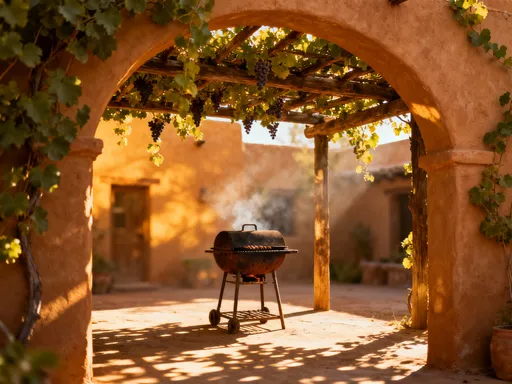
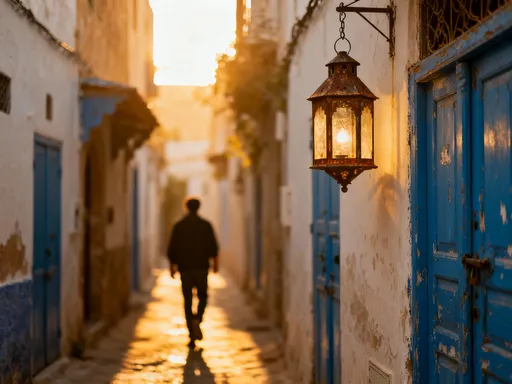
The Medina of Tunis is not a relic frozen in time—it is a living, breathing organism where centuries of tradition pulse through narrow alleyways and bustling souks. As a UNESCO World Heritage site, it draws admiration for its historical significance, but its true value lies in its daily rhythm. Here, commerce, craftsmanship, and community coexist in a delicate balance. The scent of cumin, saffron, and dried mint drifts from wooden crates as vendors arrange pyramids of spices in vibrant hues. Nearby, artisans tap gently at brass, shaping teapots and trays with techniques passed down through generations. Calligraphy stalls display Qur’anic verses in flowing scripts, while elderly men sip mint tea in shaded corners, observing the world with quiet contentment.
Walking through the Medina is less like visiting a museum and more like stepping into a centuries-old play where the actors are real and the script is unwritten. Each alley reveals a new act: a hidden courtyard where jasmine climbs a sunlit wall, a baker pulling steaming rounds of khobz from a clay oven, or a tailor humming as he stitches a traditional jebba by hand. These moments are not staged for tourists—they are lived. To experience them fully requires slowing down, shedding the urgency of modern travel, and allowing oneself to be drawn into the city’s natural cadence.
What makes the Medina extraordinary is its continuity. Unlike historical districts preserved behind glass, this is a neighborhood where people live, work, and raise families. Children dart between stalls on their way home from school, women bargain for fresh produce, and craftsmen repair wooden shutters with tools that have not changed in a hundred years. The architecture—white-washed walls, green-tiled roofs, arched doorways—frames a way of life that endures. Visitors who take the time to wander without a fixed destination often find themselves welcomed into conversations, offered sweet tea, or invited to watch a potter shape clay on a spinning wheel. These interactions are not transactions—they are gestures of shared humanity.
To fully appreciate the Medina, one must embrace its unpredictability. There are no numbered attractions or timed tours. Instead, discovery happens in fragments: a glimpse of mosaic flooring beneath a carpet shop, the echo of a muezzin’s call from a hidden minaret, or the sudden opening of a small plaza where pigeons scatter at the sound of footsteps. This is urban travel at its most authentic—a reminder that history is not something we observe from a distance, but something we walk through, breathe in, and feel in the soles of our feet.
The Street Art Enclave of Bab Souika
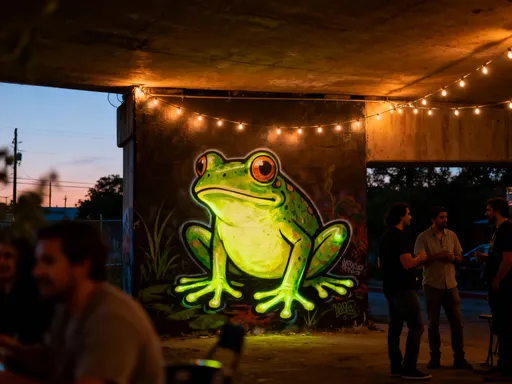
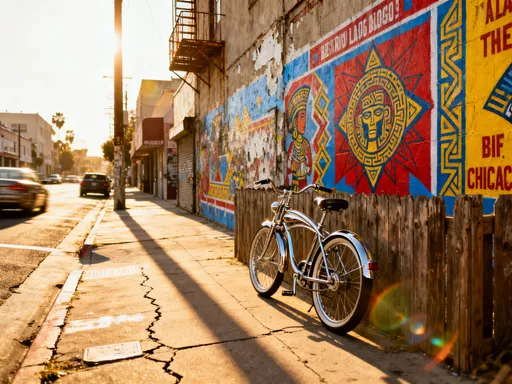
North of the Medina, the neighborhood of Bab Souika offers a striking contrast—one where the past and present collide in bursts of color and meaning. Once overlooked and marked by urban decay, this district has become a canvas for a new generation of Tunisian artists. Since the early 2010s, street art has flourished here, transforming crumbling facades into powerful statements of identity, resistance, and hope. Murals stretch across entire buildings, their bold lines and vivid palettes impossible to ignore. A child’s face stares out from a wall, eyes wide with curiosity; a dove emerges from a cracked wall, wings outstretched; a woman in traditional dress holds a tablet, symbolizing the fusion of heritage and modernity.
What sets Bab Souika apart is not just the art itself, but the context in which it exists. These murals are not decorative—they are deeply rooted in social commentary. Many were created in the aftermath of the 2011 revolution, a period when Tunisians reclaimed public spaces and demanded greater freedom of expression. Artists used spray paint and stencils as tools of dialogue, turning neglected walls into open-air galleries of civic engagement. Today, the neighborhood remains a hub of creative energy, where graffiti is not vandalism but a form of storytelling. Local collectives organize workshops, inviting youth to participate in mural projects that address issues like education, gender equality, and environmental awareness.
Walking through Bab Souika feels like reading a visual diary of contemporary Tunisia. The art evolves with the times—some pieces commemorate national heroes, others critique political stagnation, while many celebrate everyday life: a fisherman mending his net, a grandmother braiding her granddaughter’s hair, a group of friends laughing over coffee. These images resonate because they are familiar. They reflect a society in transition, one that honors its roots while reaching for something new. For visitors, the experience is both moving and enlightening—a chance to see a side of Tunis that rarely appears in guidebooks.
Exploring Bab Souika respectfully is essential. While the area is generally safe during daylight hours, it is not a tourist zone, and visitors should approach with humility. Photography is welcome, but it is courteous to ask permission before photographing people or private property. Some murals are located in residential courtyards or narrow alleys, and knocking before entering is a small but meaningful gesture of respect. Supporting local artists by purchasing prints or attending exhibitions at nearby cultural centers helps sustain this vibrant movement. The best way to experience Bab Souika is with a local guide or as part of a community-led tour, which ensures authenticity and fosters meaningful connections.
The Ottoman-Era Palaces & Hidden Courtyards
Scattered throughout Tunis are architectural treasures that offer sanctuary from the city’s bustle—former residences of Ottoman-era dignitaries, now preserved as museums and cultural spaces. Among the most remarkable are Dar Ben Abdallah and Dar Hussein, two 18th-century mansions that exemplify the fusion of Andalusian, Ottoman, and Mediterranean design. These are not grand palaces in the European sense, but intimate, inward-facing homes built around central courtyards, where light, air, and water create a sense of harmony. Their exteriors are unassuming, blending into the surrounding medina, but step inside, and the transformation is profound.
At Dar Ben Abdallah, intricate zellij tilework covers every surface—floors, fountains, and lower walls—in geometric patterns that shimmer in the sunlight. Above, carved cedarwood ceilings rise in delicate arabesques, their surfaces inlaid with mother-of-pearl and gold leaf. The courtyard garden, planted with orange trees and jasmine, fills the air with a soft, sweet fragrance. Rooms open onto shaded galleries, where benches invite quiet contemplation. Once a private residence, it now houses the Museum of Arts and Popular Traditions, displaying textiles, ceramics, and musical instruments that reflect Tunisia’s diverse cultural heritage. The experience is not about spectacle, but about immersion—a chance to feel the elegance and refinement of a bygone era.
Similarly, Dar Hussein offers a more intimate journey into the intellectual and artistic life of old Tunis. Once home to a prominent scholar, it now serves as the Museum of Oriental Arts, housing a collection of Islamic manuscripts, Persian miniatures, and Chinese porcelain acquired through centuries of Mediterranean trade. The atmosphere is scholarly and serene, a place where silence feels natural. Light filters through stained-glass windows, casting colored patterns on marble floors. In one room, a restored library displays ancient Qur’ans with illuminated calligraphy, their pages protected behind glass but still radiating spiritual presence.
These palaces are more than museums—they are spaces of reflection. Unlike crowded historical sites where visitors rush from one exhibit to the next, here one can linger, breathe deeply, and absorb the quiet beauty. They are particularly meaningful for travelers seeking depth over checklist tourism. Visiting in the late afternoon, when the sun casts long shadows and the temperature cools, enhances the experience. Few tourists make it to both sites, which means they often feel private, almost secret. Guides, when available, offer rich insights into the families who lived here, the social customs of the time, and the symbolism embedded in the architecture. For those willing to look closely, these hidden courtyards reveal a Tunisia that values subtlety, craftsmanship, and inner peace.
The Coastal Whisper of La Marsa & Sidi Bou Said
Just a short journey from the city center, the northern suburbs of La Marsa and Sidi Bou Said offer a different rhythm—one shaped by the sea, the breeze, and a long-standing love of beauty. Sidi Bou Said is perhaps the most photographed town in Tunisia, famed for its blue doors, white walls, and cascading bougainvillea. Yet beyond the postcard perfection lies a quieter truth: this is a place where time slows, where intellectuals and artists have gathered for generations, and where the Mediterranean is not just a view, but a way of life.
To experience Sidi Bou Said beyond the clichés, one must wander off the main promenade. Narrow footpaths lead down to rocky coves where locals fish from stone jetties or sit with books beneath olive trees. Small cafés, tucked into alley corners, serve strong Turkish coffee and mint tea in delicate glasses. At Café des Nattes, the air hums with conversation in Arabic, French, and Italian—a reminder that this town has long been a crossroads. The famous blue-and-white color scheme, inspired by the sea and sky, is maintained by law, but the charm lies not in uniformity, but in the details: hand-painted tiles, wrought-iron lanterns, and door knockers shaped like fish or hands.
Just a few kilometers east, La Marsa offers a more relaxed, maritime atmosphere. Its harbor is modest—no luxury yachts, but wooden fishing boats painted in bright blues and greens, their nets drying in the sun. A weekend market lines the waterfront, selling fresh seafood, local honey, and handmade soaps. Families gather in the evenings to walk the corniche, children chasing seagulls, couples sharing ice cream. The pace is unhurried, the mood convivial. Unlike Sidi Bou Said, La Marsa is primarily a residential area, home to diplomats, academics, and professionals who appreciate its proximity to Tunis without its intensity.
Together, these coastal enclaves form a thematic escape—one of serenity, elegance, and Mediterranean soul. They are not destinations for adventure or nightlife, but for contemplation and connection. The sea here is calm, the light soft, the colors gentle. Visitors who come expecting excitement may leave disappointed, but those seeking stillness will find it in abundance. Whether sitting on a bench overlooking the water, sipping tea in a hidden courtyard, or watching the sunset from a quiet cove, one senses a different kind of luxury: the luxury of time, of beauty, of being present. These are places where life unfolds gently, and where the city’s noise fades into a distant hum.
The Modern Pulse: Cultural Hubs & Creative Spaces
While Tunis is celebrated for its past, its present is equally compelling—especially in the city’s growing network of cultural centers and creative spaces. These venues, often housed in restored buildings or repurposed public spaces, serve as bridges between tradition and innovation. One of the most significant is Beit El Hikma, a cultural foundation dedicated to preserving Tunisia’s intellectual heritage while fostering contemporary thought. Located in a renovated historic building, it hosts lectures, book launches, and exhibitions that attract scholars, artists, and curious citizens. The atmosphere is thoughtful, inclusive, and quietly revolutionary—a space where ideas are exchanged without fanfare but with deep intention.
Across the city, municipal cultural centers in neighborhoods like El Omrane and Mutuelleville offer free or low-cost programs: poetry readings, film screenings, art classes, and music performances. These are not elite institutions, but community spaces designed to be accessible. On any given evening, one might find a young poet reciting verses in Arabic, a documentary about Tunisian women in science, or a jazz ensemble blending Andalusian melodies with modern improvisation. The audience is diverse—students, retirees, families—united by a shared interest in culture and conversation.
What makes these spaces vital is their role in shaping a new Tunisian identity—one that is rooted in history but open to the world. In a country where public discourse has evolved rapidly since 2011, these hubs provide safe, constructive forums for expression. They are especially important for youth, who use them to develop skills, showcase talent, and engage with civic issues. Many spaces collaborate with international organizations, bringing in artists and thinkers from across the Mediterranean and beyond, yet the focus remains local. The goal is not to imitate global trends, but to amplify Tunisian voices in a global conversation.
For travelers, visiting these cultural hubs offers a rare opportunity to engage with Tunis beyond the surface. Rather than observing from a distance, one can participate—attend a discussion, join a workshop, or simply listen to music in a courtyard under the stars. Timing a visit around local event calendars, such as the Tunis International Book Fair or the Carthage Film Festival, deepens the experience. These moments reveal a city that is not only proud of its heritage but actively redefining it—a place where culture is not preserved in glass cases, but lived, debated, and renewed every day.
Navigating the City: Practical Flow & Smart Movement
Exploring Tunis’s hidden theme worlds requires more than curiosity—it demands thoughtful planning and an understanding of the city’s rhythms. The good news is that Tunis is relatively compact and well-connected by public transit. The TGM light rail line, running from the city center to the northern suburbs, is one of the most efficient ways to reach Sidi Bou Said and La Marsa. Trains depart regularly, and the scenic coastal route offers glimpses of the Mediterranean. Within the city, shared taxis (known as louages) operate on fixed routes and are an affordable option for reaching areas not served by rail. They depart from designated stations and fill quickly, so arriving early ensures a seat.
Walking is ideal for exploring the Medina and Bab Souika, but it requires preparation. Tunis can be hot and humid, especially in summer, so early mornings or late afternoons are the best times to wander. Wearing light clothing, carrying water, and wearing comfortable shoes are essential. The medina’s alleys are not laid out on a grid—they twist and turn, doubling back on themselves. A basic map or GPS can help, but getting lost is part of the experience. Key landmarks, such as the Zitouna Mosque or the Tourbet el Bey mausoleum, can serve as reference points.
Understanding local rhythms enhances the visit. Many shops and small museums close between 12:30 PM and 3:00 PM for midday prayers and rest. Larger institutions like Dar Ben Abdallah and Dar Hussein typically reopen by 3:00 PM and stay open until 6:00 or 7:00 PM. Restaurants often don’t open for dinner until 7:30 or 8:00 PM, so evening plans should be adjusted accordingly. It’s also wise to avoid certain areas at night, particularly around the central train station and some peripheral neighborhoods, where lighting is poor and foot traffic minimal.
Staying oriented in Tunis is easier with a few simple strategies. Keeping a general sense of direction—knowing that the sea lies to the north, for example—helps when navigating on foot. Asking for directions is generally safe and often leads to friendly conversations. Many Tunisians speak French, and younger people may know some English. Carrying a printed map or saving offline maps on a phone can be invaluable. Most importantly, embracing flexibility allows for serendipity—some of the best discoveries happen when plans change and intuition takes over.
Why These Theme Areas Redefine Urban Travel
Tunis does not reveal itself easily. It resists the kind of tourism that reduces cities to checklists and photo ops. Instead, it invites a different kind of journey—one built on curiosity, patience, and emotional openness. The seven theme areas explored here—the living Medina, the artistic pulse of Bab Souika, the quiet elegance of Ottoman courtyards, the coastal grace of Sidi Bou Said and La Marsa, and the intellectual energy of cultural hubs—do not form a linear path. They are fragments of a larger mosaic, each offering a distinct mood, texture, and meaning.
What makes Tunis extraordinary is the interplay between these worlds. History is not confined to museums but lives in the hands of artisans. Art is not separated from society but woven into its walls. Nature is not a backdrop but a presence that shapes daily life. And modernity does not erase the past but converses with it. Travelers who embrace this complexity discover a city that is not just seen, but felt—a place where every sense is engaged, and every encounter carries the weight of something real.
Urban travel, at its best, is not about ticking off landmarks but about understanding the soul of a place. Tunis rewards those who look beyond the surface, who slow down, listen, and allow themselves to be surprised. It is a city of contrasts—ancient and modern, bustling and serene, public and intimate—but these contrasts are not contradictions. They are the marks of a society in motion, one that honors its past while shaping its future.
So let us travel not to collect experiences, but to connect with them. Let us wander without urgency, speak with kindness, and observe with care. In Tunis, the hidden worlds are not hidden because they are inaccessible, but because they require presence to be seen. To explore them is not to conquer a city, but to be transformed by it. And in that transformation lies the true magic of travel—not in the miles covered, but in the moments that stay with us, long after we’ve returned home.